

After a Crash on the 101 or the 405: What California Requires You to Report, and When
A collision on the 101 or the 405 happens in seconds, and the minutes after it can feel chaotic. Traffic keeps moving, horns go off, and everyone wants to get off the freeway. Still, California law sets out clear duties at the scene and two reporting deadlines afterward. Knowing them ahead of time can make a hard day a little easier.
Stop, and get out of traffic when the law allows
Every driver involved in a crash must stop. If the crash injures or kills anyone other than you, Vehicle Code section 20001 requires you to stop immediately at the scene. Leaving can be a crime.
When a crash damages only property, including cars, Vehicle Code section 20002 also requires you to stop right away. However, it lets you stop at the nearest location that will not block traffic or put other drivers at risk. On a freeway, that may mean the right shoulder or the next exit. The statute also says that moving your car this way does not affect who is at fault.
What you must share at the scene
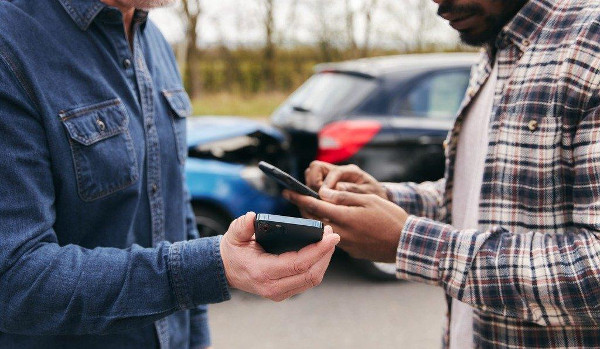
The information you exchange depends on the type of crash. If the crash injures someone, section 20003 requires you to give your name, your current address and your vehicle’s registration number. You must also give the owner’s name and address, and the names and addresses of anyone hurt in your vehicle. That goes to the person struck or the other driver and passengers, and to any officer at the scene. If asked, you must also show your driver’s license.
The same section requires you to give reasonable help to anyone hurt. That includes getting them to medical treatment, or arranging for it, if they clearly need it or ask for it. On a busy freeway, that help usually starts with a call to 911.
After a crash with property damage only, section 20002 requires you to give your name and address and the owner’s. If asked, you must show your license and registration. If you hit an unattended car, leave a note with that information where the owner will see it. Then notify the city police, or the CHP outside a city, without unnecessary delay.
Vehicle Code section 16025 adds one more exchange. Each driver must share a driver’s license number, the vehicle identification number and the registered owner’s address. Drivers must also share proof of insurance or other financial responsibility, including the insurer’s name and address and the policy number.
Who takes the report on the freeway
On Valley freeways, the California Highway Patrol handles crashes. In fact, the CHP formed its West Valley office in 1969. Its job was to take over the region’s freeway traffic duties from the Los Angeles Police Department.
When a crash injures or kills anyone, Vehicle Code section 20008 gives each driver 24 hours to make a written report. The report goes to the CHP or, inside a city, to either the CHP or the city’s police department. If an officer comes to the scene, ask for the officer’s name and the report number before you leave.
The DMV report many drivers miss
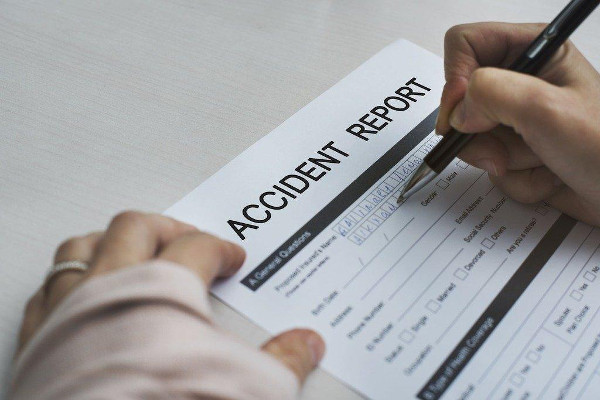
The second deadline has nothing to do with the police. Under Vehicle Code section 16000, you must report the crash to the DMV within 10 days in two situations. The first is a crash that injures or kills anyone. The second is property damage of more than $1,000 to any one person. You use the SR-1 form, and you may file it yourself or through an insurance agent, broker or legal representative.
The DMV says you need the SR-1 in addition to any report you make to the police, the CHP or your insurer. Even a minor injury counts. On the form, you must also list anyone involved who complained of an injury.
A short checklist for your glove box
Stop. Move to the shoulder only in a property-damage crash, and only if the car can move safely.
Call 911 if anyone may need medical help.
Exchange names, addresses, license numbers, registration and insurance details.
Write down the officer’s name and the report number.
File the SR-1 with the DMV within 10 days when the law requires it.
Once you finish the reports, the claim itself begins. For a look at what comes next, Viciti Law explains how car accident claims work in California.
About the author: Ivetta Avanesov is the founding attorney of Viciti Law in Sherman Oaks, California. The firm handles personal injury cases and insurance claim disputes, and it serves clients in English, Spanish and Russian. This article is general information, not legal advice.