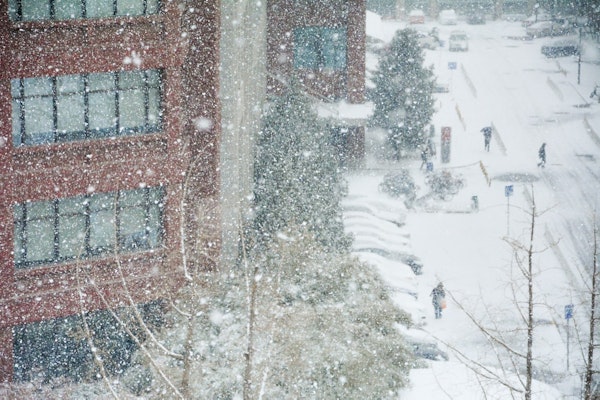
Analysts at Barclays believe that the unprecedented level of losses caused by February’s Winter Storm Uri in the US could be ‘setting the stage’ for another above-average catastrophe year for re/insurers.
A decade after a devastating magnitude-9.0 earthquake struck Japan, the U.S. remains largely uninsured against this natural disaster, according to the Insurance Information Institute (Triple-I).
A record-breaking natural disaster, Winter Storm Uri, is slated to result in the largest amount of insurance claims in Texas history from a single event. The winter storm swept through the state causing widespread power outages, water shortages, frozen pipes that burst and flooded buildings, snow or ice damage to buildings, fires, car accidents and deaths.
The US averages over 1,150 tornadoes every year. That’s more than any other country. In fact, it’s more than Canada, Australia and all European countries combined.
The first estimates of losses for the Texas deep freeze event, which resulted in burst pipes, widespread blackouts, and water shortages, have arrived – and they’re not pretty.
It didn’t gain as much attention in the news, but the past year brought about a series of natural disasters around the world in addition to the pandemic. This continues a major trend we have been witnessing for the last two decades.
Last month’s winter storm that left dozens of Texans dead, millions without power, and nearly 15 million with water issues could wind up being the costliest disaster in state history.
Coverage litigation arising from Winter Storm Uri’s impact on Texas is likely to be significant, due to the vast number of businesses hit both within the state and beyond, legal experts say.
Even as power has flickered back on, the deep freeze San Antonio was cast into last week continues to cause problems in the form of burst pipes, collapsed roofs, and water damage.
The ongoing winter storm event in the United States, named winter storm Uri, is thought likely to become the largest winter storm loss on record for the insurance and reinsurance industry, while the Texas insurance regulator said it could have a bigger impact than hurricane Harvey.
In 2020, the US property and casualty (P&C) insurance industry was dealt a heavy blow by the COVID-19 pandemic but there were other factors at play that put insurers in an even tougher spot, a new report has found.
Catastrophe losses covered by insurance and reinsurance reached $78 billion in 2020 according to Willis Re, which the broker sees as 17% above the 10-year average.
The New Jersey Supreme Court has ordered several insurance companies to pay the amount owed to a public transportation agency related to trains damaged during Hurricane Sandy in 2012.<br /><br />The insurers are on the hook for about $300 million in payments, to cover for the remaining amount owed to the train operator.<br /><br />NJ Transit, the operator of the trains, had parked 343 locomotives and rail cars from its Meadowlands Maintenance Complex in Kearny prior to Sandy hitting the region. During a previous court proceeding, the agency had argued that the facility had not flooded in the past, hence it left the trains there.
Flood risk insurtech company FloodFlash, which offers an innovative sensor-based approach to support parametric flood insurance triggers, has beaten its own record on rapid claims payment, paying out to one policyholder within ten hours for the impacts of flooding during UK storm Christoph.