A recent federal court ruling holding that a migrant farm worker’s death from COVID-19 fell within the scope of workers compensation law is part of a growing body of rulings that bar liability lawsuits related to the pandemic against employers.
I moderated a panel at the American Bar Association Mid-Winter Conference in New Orleans this past week. Our topic was concerning delays in treatment of compensable claims, with a look at the causes and consequences regarding both expense and outcomes for the industry.
While companies have made steady progress in reducing minor injuries and lost workdays, they are seeing less success in cutting down on serious injuries and fatalities, according to a new report.
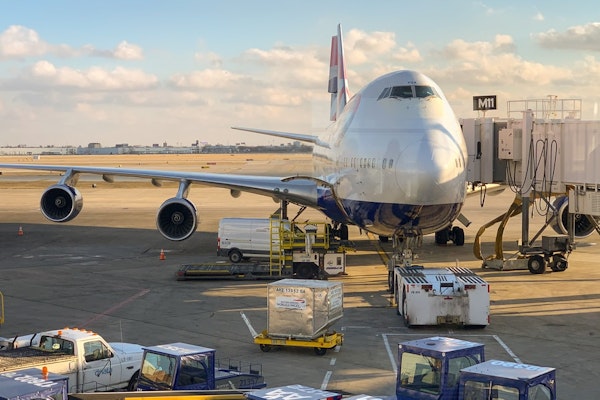
A Florida appellate court on Wednesday ruled that an airport worker was not entitled to benefits for an injury that happened while walking through the terminal to a shuttle bus stop.
An area of workers’ compensation that has grown in controversy over the years is when is an employee considered to be ‘at work.’ A question arises if an employee is injured when in a parking lot outside of their place of employment either starting their day or leaving after clocking out.
As a physician, I can’t help but view our industry through a distinctly patient-centered lens. Our very reason for existing is to help injured employees get well, ideally to get them back to their pre-injury status in days or weeks.
Four states in the first week of February introduced or moved forward on workers compensation presumption bills that would make post-traumatic stress disorder and other mental ailments compensable for first responders, in a continuation of a years-long legislative trend.
In McDonald v. Symphony Bronzeville Park, LLC, 2022 IL 126511, the Illinois Supreme Court issued an opinion finding the exclusive remedy provisions of the Illinois Workers’ Compensation Act (‘Compensation Act’) 820 ILCS 305/1 et seq. does not bar an employee’s claim for statutory damages under the Illinois Biometric Information Privacy Act (‘BIPA’), 40 ILCS 14/1 et seq.<br /><br />An employee filed a class-action lawsuit against her employer for violating BIPA. Her employer required its employees to use a biometric timekeeping system in order to scan an employee’s fingerprint for purposes of authenticating an employee and tracking their time at work. The employee alleged that her employer never obtained her written consent to store her biometric information or informed her how the information will be stored.
The Centers for Medicare & Medicaid Services (CMS) has updated its Workers’ Compensation Medicare Set-Aside Arrangement (WCMSA) Reference Guide (Reference Guide). The latest version, Version 3.5, was published Jan. 10, 2022.
The COVID-19 omicron variant appears to be waning and several states have lifted their mask mandates in recent weeks, but legislators are just getting started when it comes to the pandemic and workers compensation.
Most people now recognize the energy savings benefits of green buildings. These buildings use less water, energy and other natural resources. In some cases, they can increase biodiversity, produce their own energy and reduce the urban heat island effect.
If you ever find yourself in a room of claims and litigation professionals and need a good icebreaker, be sure to ask the person closest to you this question: Did you find the industry, or did the industry find you?
Monday, we wrote about a proposed bill in Utah that would allow firefighters combatting fires in states other than their own to collect workers’ compensation benefits if they were injured on the job. Legislators there are running into significant headwinds, in the form of paranoid accusations that they are really establishing paramilitary services to enslave people and violate the rights of citizens.
It is undisputed that the claims adjuster sits in the hot seat of the workers’ compensation claims process. At the frontlines of claims management, they must balance the interests of multiple stakeholders while juggling important and often time-critical authorization decisions that impact an injured worker’s care in relation to their workers’ comp claim.