Wisconsin’s highest court on Wednesday became the third state top court in a row to rule that businesses are not entitled to insurance coverage for losses resulting from the COVID-19 pandemic and government-imposed restrictions on gatherings.
Even before the pandemic and ‘the great resignation,’ insurance faced a ‘talent gap’. Part of the challenge has been finding replacements for a rapidly retiring workforce, as the median age of insurance company employees is higher than in other financial sectors.
The Restoration Association of Florida (RAF) on Tuesday filed a lawsuit in a Leon County Circuit Court claiming that a new law approved by the Florida Legislature last week unconstitutionally singles out home repair contractors rather than targeting the rudimentary catalysts causing Florida’s homeowner’s insurance crisis.
Subrogation professionals might read the title to this article and wonder what subrogation and the confounding labyrinth of insurance coverage might have in common. After all, aren’t we all comfortably nestled in the subrogation world so that we don’t have to wade through endless pages of small font, state-specific endorsements, and baffling insurance policy lexicon?
It was, in my opinion, one of the best sessions at this year’s Annual Insights Symposium produced by NCCI last month. ‘Human Factors -- Expanding the Science of Predictive Analytics and Artificial Intelligence (AI),’ was presented by James Guszcza, Research Affiliate with the Center for Advanced Study in the Behavioral Sciences at Stanford University.
Some good news on the deepfake front: Computer scientists at the University of California have been able to detect manipulated facial expressions in deepfake videos with higher accuracy than current state-of-the-art methods.
As a fraud investigator prepared to revoke the license of a Lafayette insurance agent and fine her $10,000, there was one final step before taking action: getting approval from Louisiana Insurance Commissioner Jim Donelon.
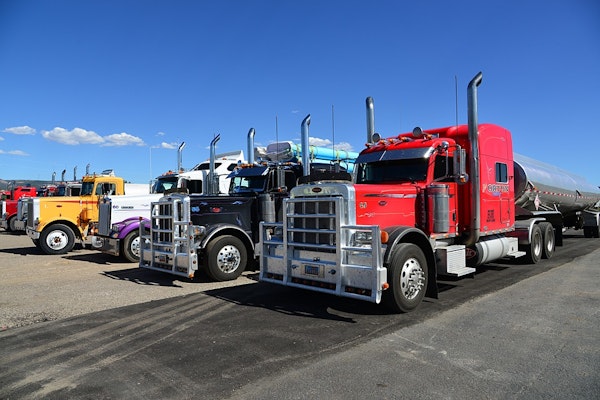
Cargo theft costs are rising in the U.S. as higher-value goods such as vehicles and electronics are targeted, and as inflation pushes up the cost of goods.
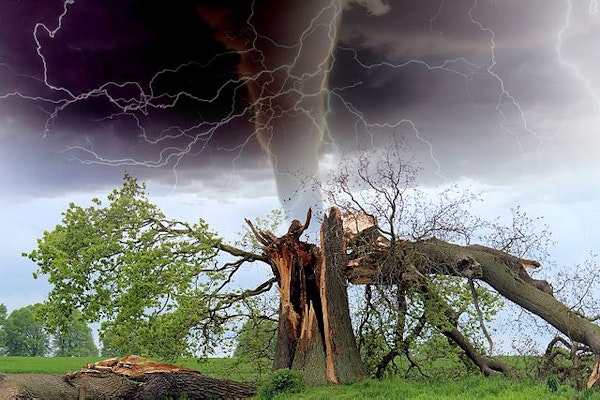
With the spring season known to bring the most dangerous storms and damaging tornados, the next few months are likely to see continual and damaging weather events across the U.S. <br /><br />Earthquakes, storms, floods and droughts -- the number of recorded loss events resulting from natural disasters has been increasing for some years now. However, some insurers that are using more traditional risk assessment methods are finding the emerging risk landscape too unpredictable. <br /><br />Climate change is one of the most pressing issues in the insurance industry today, but forward-thinking insurers have found the way to combat it: AI.
Workers injured by picking up a bag of French fries, hitting a bowling ball with a sledgehammer and getting a snack out of a vending machine are just three of the wackiest workplace injuries, according to Evotix, which provides health and safety solutions.
Extreme weather events have become common, some bringing unprecedented levels of destruction to structures and facilities, overwhelming owners, property managers and insurers. In response, nearly all major insurers have created centralized Cat units dedicated to handling claims arising from extreme weather events.
Imagine dropping your vehicle off with a reputable car dealer for an oil change, and then find yourself getting sued for negligence when that vehicle is involved in an accident. As covered on this site and elsewhere, that is exactly what is happening in Michigan right now.
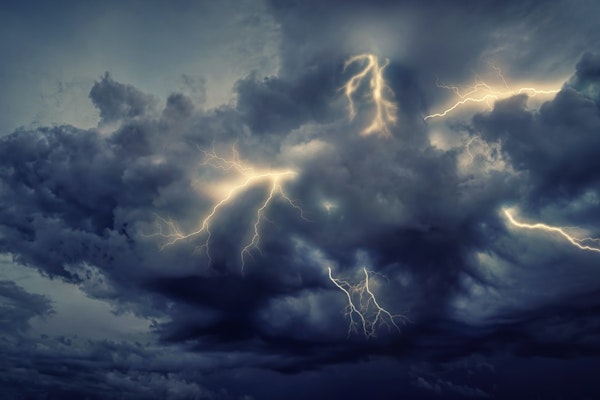
Severe convective storms are among the most common, most damaging natural catastrophes in the United States. In 2021, they resulted in the third-costliest year on record for the U.S. insurance industry, according to Aon, and catastrophe modeling firm RMS says the average annual insured loss from such storms nearly equals that from hurricanes, at around $17 billion.
Tesla Inc. must keep defending itself in open court against claims that female employees face ‘rampant sexual harassment’ in its largest California factory, a judge ruled, spurning the company’s request for closed-door arbitration.