Waivers of liability for disease transmission might protect commercial clients from lawsuits, but the industry will not know for sure until one is tested in an appeal court, a litigation defence lawyer suggests.
The COVID-19 pandemic has sent reverberations through every industry and has the potential to take a heavy economic toll on workers compensation insurers and self-insurers in particular. The current environment creates many questions. Here are answers to those being most frequently asked.
Oh, what a difference a state line makes. In Florida, a work-at-home workers’ compensation claims professional who tripped over her dog while reaching for a cup of coffee could not receive workers’ compensation benefits. If she moved just a few miles north, over the Georgia border, it would now be a different story.
Insurtech investment is at an all-time high. In 2019, the insurtech sector hit a record $6.37 billion, according to Willis Tower Watson, up considerably from $4.17 billion the year before.
In the first six months of 2020, Tennesseans received more than twice the money as a result of complaints about denied insurance claims than they did in the first six months of 2019.
Friday’s hail storm in Potter and Randall Counties was declared a catastrophic event, meaning over 500 insurance claims were made in each county. The Insurance Council of Texas is projecting around 2,800 auto claims and around 1,600 homeowners claims in Amarillo from the first round of hail storms in Amarillo.
A Missouri appeals court on Tuesday rejected Johnson & Johnson’s bid to throw out a jury verdict in favor of women who blamed their ovarian cancer on its baby powder and other talc products, but reduced its damages award to $2.12 billion from $4.69 billion.
In the debate over coverage for coronavirus business income losses, many insurers have asserted that the virus causes “no physical loss or damage” as their reason for denying claims. The argument is reminiscent of past coverage battles over just what constitutes “physical loss or damage” in the insurance realm.
The state-level workers’ comp system is difficult enough to navigate in an average world. But combined with ever-changing federal mandates related to Coronavirus, it adds a complexity to the pandemic environment that will impact employers for a long time to come, as they seek to not only protect employees, but also mitigate their legal and compliance risks.
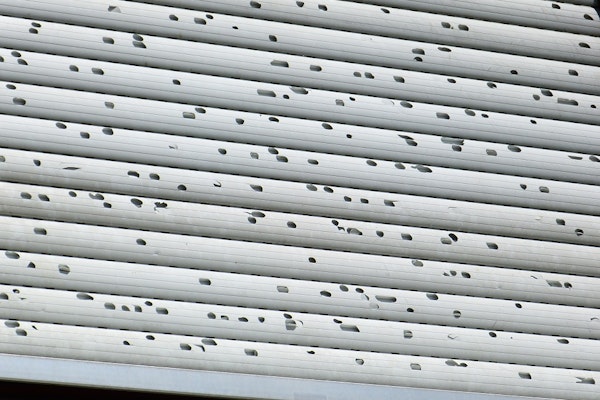
If you have clients in the Calgary area who suffered property damage in the June 13 hail storm, they could be waiting a while to get their properties repaired, an executive for one independent adjusting firm suggests.<br /><br /><br /><br /><br />Some Calgary neighbourhoods were hit the evening of June 13 with hail the size of tennis balls, the CP reported earlier.<br /><br />The photos of the damage are “pretty startling,” Crawford Canada chief client officer Greg Smith told Canadian Underwriter Thursday. “You can’t believe that damage was caused by hail when you look at it.”<br /><br />Quite often in a thunderstorm, hail drops due to gravity, said Glenn McGillivray, managing director of the Institute for Catastrophic Loss Reduction.<br /><br />“In this case we had dow
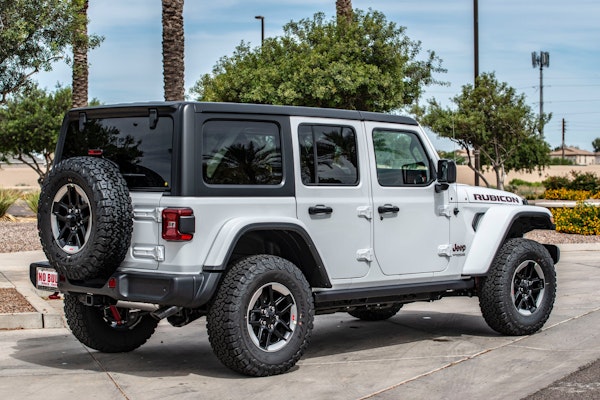
Fiat Chrysler is recalling almost 95,000 Jeep Cherokees worldwide because a transmission problem can cause the small SUVs to lose power unexpectedly. Also, when drivers shift into park, the transmissions may not go there, increasing the risk of a rollaway crash.
The coronavirus is forever changing the landscape in which medical care is being delivered in this nation. The surge of patients streaming into emergency departments across this country is such that hospitals simply cannot keep up.
Allstate Corporation has estimated that for the month of May 2020, it saw catastrophe losses of $350 million, pre-tax. After tax, the insurer’s estimated losses for the month were pegged at $277 million.