There has been a radical change taking place in insurance over the past few years. It revolves around the race to zero — or, the concept of streamlining the end user experience to ask less and less information when it comes time to file and process claims.
Individuals perceive risks in markedly different ways. One person may consider a risk to be critical, while another could consider it inconsequential. Often rooted in psychology, these differences in risk perception can create challenges for risk professionals, especially when designing and implementing an effective risk management program.
Global pharmaceutical and life sciences giant Bayer AG is currently negotiating thousands of US lawsuits claiming that the company’s glyphosate-based Roundup grass and weed killer causes a type of cancer called non-Hodgkin’s lymphoma.
COVID-19 has left the world in uncharted waters and in many areas forced a digital acceleration of companies’ product and service delivery processes and distribution channels.
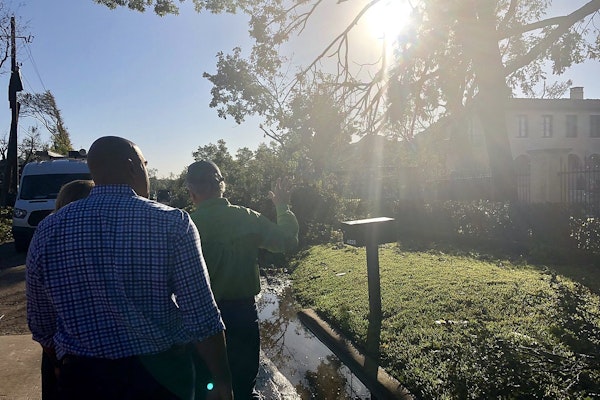
At least 16 people were killed after tornadoes began ripping through the South on Easter, destroying homes and storefronts and leaving over 1 million people without power from an intense storm system now headed towards the Mid-Atlantic.
Barbara Snowden dreamed of opening a wig shop to help women who’d lost their hair during chemotherapy feel better as they battled cancer. In November, she beamed at the grand opening of Hair Goals Club in the Houston suburb of Humble, Texas.
Complications from the coronavirus have been added to a list of issues for which school districts and parents of nicotine-addicted teens are seeking damages from Juul Labs Inc. and other companies in the vape industry.
While facing a sharp drop in new car wreck cases, Baton Rouge personal injury attorneys are beginning to field a smattering of inquiries about coronavirus-related litigation.
One may not need to be able to read the cannabis leaves to divine the impact of the COVID-19 pandemic on cannabis and insurance. Some good guesses from any insurance professional with their foot in the door of a dispensary, farm, lab, or distribution facility, might go along the lines of: Vaping will be tougher to insure, reinsurance will be harder to find, expect even more exclusions in policies, greater capacity.
The next frontier of injury prevention is occupational exoskeletons — wearable devices that physically assist, augment and support workers and help bolster workplace safety when traditional ergonomic controls are not feasible.
A tornado touched down in Poinsett County on Wednesday night as storms moved through the region and damaged multiple homes. Meteorologist Kole Fehling with the National Weather Service in Memphis said a tornado was confirmed in Poinsett County, and crews were sent out Thursday morning to determine its strength and path.
Credit the coronavirus with one thing. In an era when individuals and organizations strive to establish themselves as “thought leaders,” COVID-19 has vividly—or, should we say, morbidly—demonstrated the importance of people becoming sensible “thought followers.”
Everyone seems to agree on two things when it comes to controlling the novel coronavirus: It is going to be monstrously expensive, and someone else should be paying the cost. Particularly if “someone else” is an insurer.
A few weeks ago, Hilary Bricken wrote about the proliferation of ketamine clinics in the United States and the logistics and legalities of operating a ketamine infusion clinic. As Hilary explained, the only FDA approved use of ketamine is for the induction and maintenance of anesthesia, though it also used for off-label infusions in the management of psychiatric disorders and chronic pain management.
Internet search queries for "how to set fire" are spiking amid the downturn from the coronavirus pandemic, which experts say is a sign that some people may be planning to commit insurance fraud.