Two million people work in the U.S. insurance industry. According to the U.S. Census Bureau, 300,000 of these workers will retire in the next three years, and 50% will retire by the end of this decade.
On March 1, 2022, the Northern District of Illinois issued an opinion in Citizens Insur. Co of Am., & Hanover Insur. Co. v. Thermoflex Waukegan, LLC, 20-CV-05980, 2022 WL 602534 (N.D. Ill. Mar. 1, 2022) addressing whether insurance coverage existed for an employer with respect to its employee’s claims of violations of the Illinois Biometric Information Privacy Act.
MARTA and its insurer will pay $17 million to settle lawsuits stemming from the death of a contractor. Robert Smith of Griffin, 38, was working along the tracks near Medical Center station in June 2018 when a MARTA train struck a vehicle he had been operating.
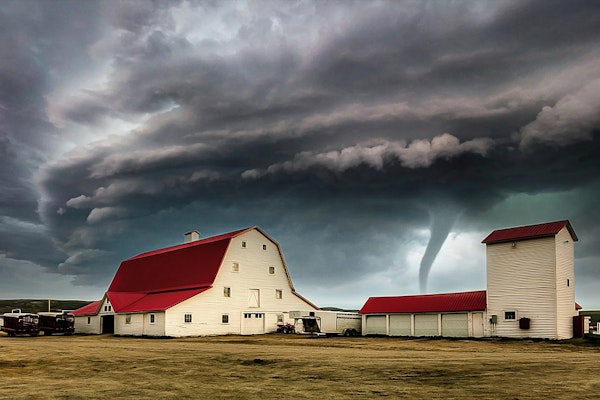
An EF-4 tornado hit Winterset before continuing on to Norwalk, Pleasant Hill and Newton among other central Iowa communities on Saturday afternoon, the National Weather Service confirmed.
With nearly 1,100 homes evacuated, firefighting crews continue to battle several dangerous wildfires across three counties in the Florida Panhandle, officials said.
The widespread digitization of the economy has created a wealth of data on risk exposures for insurance companies. But how insurers exploit what has become known as big data has prompted widespread discussion around data ethics, especially in regard to transparency and fairness where consumer data is used to market and to price risk.<br /><br />Insurers are already familiar with the concept of adverse selection. Now they are getting to grips with the new concept of inverse selection that arises with big data.<br /><br />It’s useful to look at a basic risk spectrum to explore how big data can fundamentally change the information balance of insurers and insureds, and the latter’s perception of risk.
Negotiation is an integral and required part of subrogation. Some subrogation professions thrive on it and are exceptional at negotiation techniques. Others can see it as a necessary evil.
The Intergovernmental Panel on Climate Change (IPCC) has been publishing assessment reports describing expected climate change impacts and risks since 1990 and has warned of the growing risks from climate change in each report.
Local governments in the United States in recent years have begun adopting ‘Vision Zero’ policies, which aim at cutting roadway fatalities to zero. Such policies - which have demonstrated success abroad - have drawn even more interest since the onset of the pandemic, during which traffic fatalities and injuries have surged.
Federal legislation forbidding mandatory arbitration in sexual harassment and assault cases will lead to higher legal costs and possibly higher employment practices liability rates, experts say.
The risk of cyberattacks has increased following Russia’s invasion of Ukraine and may test the effectiveness of ‘war exclusion’ and ‘hostile act exclusion’ language in policies, says Fitch Ratings.
Look closely … A trend is emerging. While we were all distracted, navigating the ever-shifting terrain of pandemic life, courts and legislatures moved forward with attempts to hinder fraud-fighting.
For years, the tiny startup Kytch worked to invent and sell a device designed to fix McDonald’s notoriously broken ice cream machines, only to watch the fast food Goliath crush their business like the hopes of so many would-be McFlurry customers.
Researchers have used artificial intelligence to predict where flood damage is likely to happen in the continental United States. The findings suggest that recent flood maps from the Federal Emergency Management Agency do not capture the full extent of flood risk.
The Tampa insurance startup Slide is acquiring $400 million in premiums from St. Johns Insurance Co., adding coverage to an estimated 150,000 policyholders, the company announced Tuesday.