The Treasury Department is growing increasingly concerned that climate change is making property insurance scarce in disaster-prone areas and is looking at launching the first nationwide assessment of insurers’ financial exposure to climate risk.
I’ve spent my entire career trying to develop and improve catastrophe and weather-related models and analytics. So, from a personal perspective, if there’s one thought among many others that I would like to get across, it’s a sense of the opportunity to enhance decisions linked to climate risk mitigation and resilience if we use our ever-improving scientific understanding and modeling capabilities wisely.<br /><br />And I think there’s one thing that holds an important key to unlock that opportunity – openness. When I talk about openness, I don’t mean a willingness from governments and others to set out and stick to commitments to reduce emissions – although that would be rather helpful, of course. I’m referring to two things, actually.
Nebraskans have watched severe weather track across the state in waves since May, devastating some areas multiple times. In Kearney, Realtor Patrick Slack can only shake his head at the damage. A commercial building was so badly pummeled by hail that the loss was larger than the sale price, Slack said.
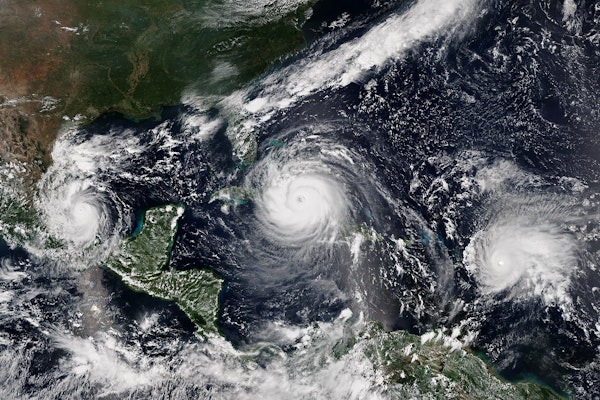
CoreLogic has said that New York and Miami have the most homes at risk of storm surge damage, alongside the highest reconstruction cost value. According to the firm, its 2022 Hurricane Report shows that nearly 7.8m homes with more than $2.3tn in combined reconstruction cost value (RCV) are at risk of hurricane-related damages.
As employees continue to work from home in either a full-time capacity or hybrid model, companies need to consider the rising risk of natural disasters. When employees are expected to be productive from home, how are they to manage the demands of the ‘office’ after their property is severely damaged and their lives are disrupted?
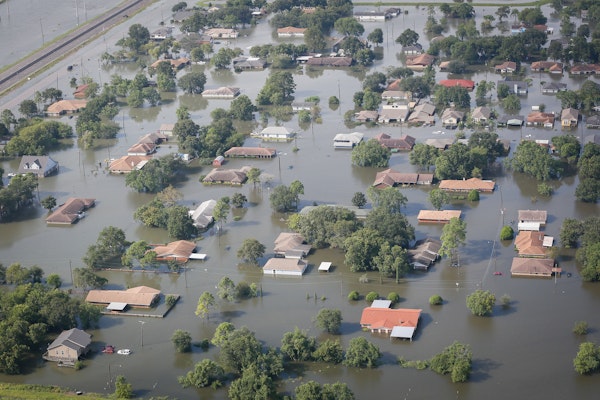
Federal programs that have elevated thousands of U.S. homes above floodwaters may violate civil rights law by shutting out many homeowners who are Black or Hispanic or who have low incomes.
Property and casualty insurers are bracing for another year of record losses from catastrophic hurricanes, tornadoes, wildfires, flooding, and other natural disasters already unfolding.
White House officials met last week at Florida International University (FIU) to announce an initiative to help state and local governments adopt modern building codes and standards and help communities become more resilient to hurricanes, flooding, wildfires, and other extreme weather events.
In 1994, the magnitude 6.7 Northridge earthquake hit California, damaging 40,000 buildings and causing insured losses of $12.5 billion. If an earthquake like Northridge were to occur today, it could cost nearly $19 billion in insured losses. By 2044, there is a 93% possibility that an earthquake of that magnitude or greater will strike California.
The Biden administration is proposing a massive overhaul of federal flood insurance that would prevent the government from insuring newly built homes in flood-prone areas and would drop coverage for homeowners who receive repeated claims payments.
Already this year, three Florida insurers have been declared insolvent due to their failure to obtain full reinsurance as the 2022 hurricane season bears down. ‘We have the potential of a massive failure of Florida insurers, probably the worst on record,’ says Triple-I communications director Mark Friedlander.
As NatCats increase in frequency, getting adjusters to the scene of a claim has been ‘tougher than it’s been in years past.’ Claims experts blame economic strain and inflationary pressures, as well as to the ongoing war for talent.
Extreme weather events have become common, some bringing unprecedented levels of destruction to structures and facilities, overwhelming owners, property managers and insurers. In response, nearly all major insurers have created centralized Cat units dedicated to handling claims arising from extreme weather events.
Severe convective storms are among the most common, most damaging natural catastrophes in the United States. In 2021, they resulted in the third-costliest year on record for the U.S. insurance industry, according to Aon, and catastrophe modeling firm RMS says the average annual insured loss from such storms nearly equals that from hurricanes, at around $17 billion.