Florida’s insurer of last resort, Citizens Property Insurance Corps., predicts to hit a record with nearly 2 million policyholders by the end of 2023, citing ‘continued instability’ in the state’s insurance market.
The insurance industry is struggling to adapt to a new normal in which losses fueled by climate change are now regularly exceeding $100 billion a year.
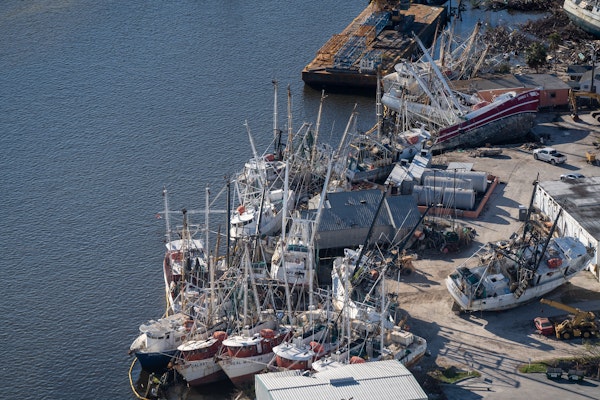
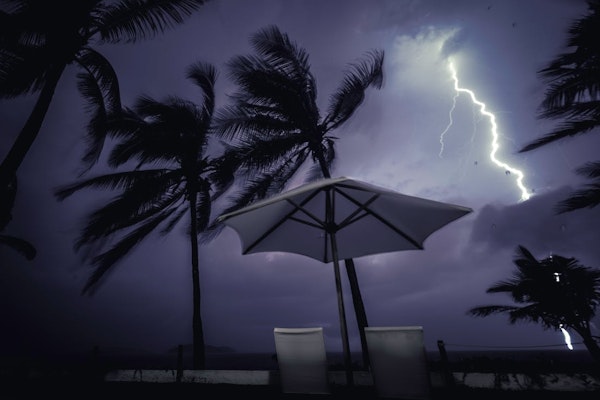
The large coverage and long duration of drought conditions across the U.S. set several records in 2022. The year was also marked by numerous severe weather events, devastating hurricanes and deadly flooding across parts of the country.
Geico is off the hook, at least for now, from paying $5.2 million to a Missouri woman who alleged she contracted a sexually transmitted disease in a car insured by the company.
For years, trial lawyers have been threatening and filing class action lawsuits in multiple states in an effort to thwart their arch nemesis -- subrogation. States such as Montana have gone so far as to hold that it is the burden of the subrogated insurance company to determine and prove that its insured has been fully made whole before it can take any action toward recovering its subrogated insurance payments.
Chuck Hawley stared out at the waves swirling through Monterey Bay as he prepared to destroy the small beachfront home his parents built by hand in 1957. He had no choice: Storm-fueled waves in the region, just east of Santa Cruz, had torn the 1,100-square-foot house off its foundations and floated it 30 feet into the street.
Lawyers argued before the Texas Supreme Court on Monday over whether the state’s power grid operator should be protected from lawsuits, a question that has become especially important after the deadly February 2021 freeze.
Insurers must keep pace with the constantly evolving risk environment. That means keeping pace with climate change and growing catastrophic event losses; the explosive growth of intangible assets and the challenge of valuing those assets; and the increasing exposure of their portfolio to cyber risks.
Rising thefts of catalytic converters -- driven, at least in part, by increased black-market prices for the motor vehicle pollution-control component -- have prompted renewed state and federal focus on stopping these crimes.
More than 1.3% of the adult population in the U.S. was displaced by natural disasters in the past year, with hurricanes responsible for more than half of the forced relocations, according to first-of-its-kind survey results from the U.S. Census Bureau.
The insurance industry has long sought a solution to address the lengthy and costly delay between the time of accidents and the notification of a claim, also known as FNOL (first notice of loss).
What you don’t know can’t help you. That is certainly the case in Iowa when plaintiff’s attorneys claim no obligation to reimburse a carrier exists based on a general assertion that the insured was not made whole.
The metaverse will offer new forms of immersive entertainment, modes of social interaction, and opportunities for collaboration. It is also expected to generate tremendous economic value.
With interest rates on the rise, sticky inflation, few signs of a cooling labor market, and continued instability in Russia, China and beyond affecting energy prices and exports, the builder’s risk insurance industry is in store for more complex claims in 2023.
Insured damages from Hurricane Fiona are now estimated at over $800 million, according to Catastrophe Indices and Quantification Inc. (CatIQ), as it remains the most costly extreme weather event ever recorded in Atlantic Canada.