Climate risk figured prominently throughout Triple-I’s Joint Industry Forum last week -- from the impact of severe weather events on insurers’ loss ratios to its significance in terms of changing risk profiles and to Florida homeowners’ insurance crisis.
According to reinsurance firm Swiss Re, global insured natural catastrophe losses have reached $115 billion in 2022, year-to-date, with hurricane Ian the main contributor at an estimated $50 billion to $65 billion.
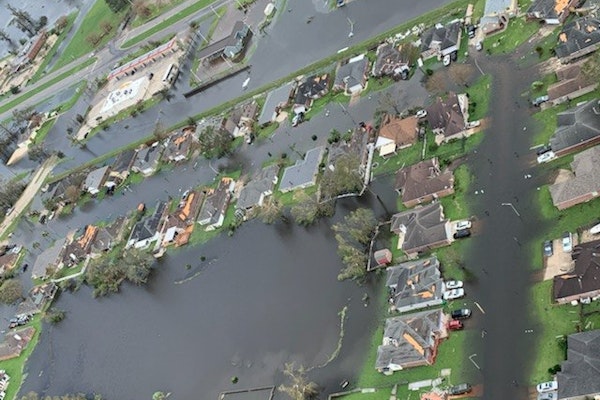
More than a year after Hurricane Ida swept across Louisiana, the Category 4 storm is triggering a property-insurance crisis in the state that has bankrupted 11 insurance companies and will force some homeowners to pay annual premiums of nearly $18,000.
Ninety percent of the counties in the United States suffered a weather disaster between 2011 and 2021, according to a report published this past week. Some endured as many as 12 federally-declared disasters over those 11 years.
Catastrophe risk modelling firm RMS has estimated that the private insurance and reinsurance market loss from recent hurricane Nicole will fall below $2 billion, with its best estimate being for a $1.6 billion industry loss.
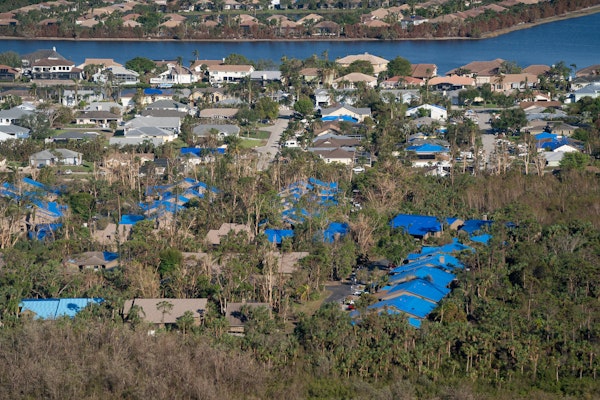
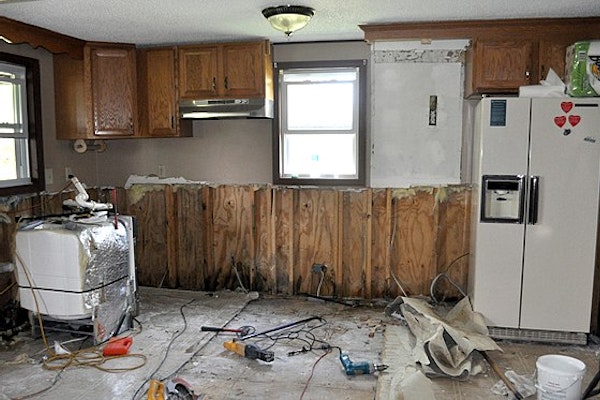
Kathryn Schweitzer worked recently in the yard in front of her small, yellow house in a North Port neighborhood where mildewing furniture, drywall and other personal belongings line the streets, the remains of destruction left behind by Hurricane Ian.<br />Schweitzer tries to shrug off the $8,000 she’s paid so far "just to get the walls back" in her flood-damaged home, because "if you can’t cry, you get to laugh."
Floridians whose properties were destroyed or damaged by Hurricane Ian are expected to file between $53 billion and $74 billion in insurance claims. The federal government will disburse billions more in disaster assistance through tax relief, subsidies and direct grants.
We have written here before about the dreadful state of the property insurance market in Florida. A proof of concept was definitely not needed, but Hurricane Ian provided it anyhow. Insured losses from Ian have been estimated at between $28 billion and $47 billion; add uninsured losses and estimates balloon to $70 billion.
They refer to it simply as ‘The Storms of 98.’ Fierce rains and high tides combined to make San Francisquito Creek overflow its banks at 1 a.m., inundating houses, cars and streets. Firefighters used boats to rescue people trapped in their homes and school buses took evacuees to the Cubberley Community Center for shelter in the predawn hours. Approximately 1,700 properties in East Palo Alto, Palo Alto and Menlo Park were damaged.
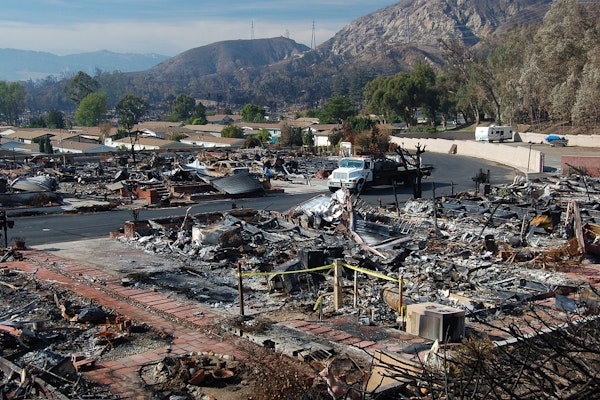
A wildfire that destroyed nearly 1,100 homes and businesses in suburban Denver last winter caused more than $2 billion in losses, making it by far the costliest in Colorado history, the state insurance commissioner said.
The Florida Hurricane Catastrophe Fund, a state program that provides critical backup coverage to property insurers, is estimated to have $10 billion in losses from Hurricane Ian, officials said Wednesday.
The National Insurance Crime Bureau (NICB) has issued an advisory that policyholders should be on the lookout for scammers, as the number of insurance claims filed related to Hurricane Ian hits nearly half a million.
In late July of 2018, massive wildfires blazed across Northern California. At the same time in Colorado, weather alerts went out warning of heavy thunderstorms and baseball-sized hail. The two disasters were separated by a thousand miles, but scientists are now finding they’re connected.
Final numbers won’t be available for months, but one thing is certain: An overwhelming number of drivers in Hurricane Ian’s path will be replacing a vehicle at a time when inventories are already tight.