Isaias was forecast to be near hurricane strength as it approached the Carolinas Monday, just a day after bands of heavy rain from the tropical storm lashed Florida’s east coast.
Flood disruptions could cause a business’s stock to drop significantly over the succeeding 12 months, reflecting investors’ shaken confidence in the company’s managerial decision-making, according to a new study commissioned by FM Global.
Autonomous vehicles need their own space to operate, a report says, and auto executives agree that putting them on the same roads as human-driven cars in a mixed-use environment will only increase liability claims.
Tropical Storm Isaias strengthened overnight and winds could reach near hurricane strength as it approaches Florida later this week, according to the National Hurricane Center.<br /><br />Isaias is currently bringing life-threatening flash flooding and gusty winds to Puerto Rico.<br /><br />The projected path of the storm continues to keep most of Florida in its track. The state could start to feel the impacts from Isaias by the end of the week and into the weekend.<br /><br />Winds could reach near 70 mph by Saturday, according to the Hurricane Center. A storm is classified as a hurricane when sustained winds reach 74 mph.
Chubb Chairman and CEO Evan Greenberg told CNBC on Thursday the insurance industry is confronting an event like no other when it comes to the Covid-19 pandemic. “It has no time limit, and it has no geographic bounds,” Greenberg said on “Squawk Box.”
More than 8.5 billion records were compromised in data breaches in the span of one year ending April 2020, and the average cost of a mega-sized data breach was $3.86 million, a new report by IBM has found.
Karen Clark & Company (KCC) has estimated that insurance industry losses from Hurricane Hanna, the first hurricane of the 2020 North Atlantic hurricane season, will near $350 million.
I’ve never been a big fan of the term disruption. I believe that in the InsurTech world, a majority of the startups are partnering with incumbents to enable industry transformation. They are catalysts for change, to be sure.
Small businesses and their insurers are set to plead their case to a special panel of federal judges on the prospect of combining a multitude of lawsuits over pandemic-linked business loss coverage in a single court venue.
A recent class-action lawsuit filed by the owner of The Crescent Plaza Hotel against Zurich American Insurance Co. in the Northern District of Illinois illustrates the reappearance of one of the arguments litigated numerous times.
On May 25, 2020, police officers in Minneapolis responded to a 911 call from an employee at Cup Foods market who complained that a customer had just purchased cigarettes with a counterfeit $20 bill.
A train fire and derailment caused a partial collapse of a railroad bridge over Tempe Town Lake. The incident occurred around 6 a.m. Wednesday on the south side of the lake near Mill Avenue.
Greta Thunberg, global climate marches, documentaries such as Love Canal, Gasland and The Devil We Know — over the last decade, pop culture and the media have been turning up the volume on the conversation surrounding climate change. Environmental insurance claims have been rising over the last few years, and according to a survey report from Willis Towers Watson, hard market conditions are also contributing to shrinking capacity.
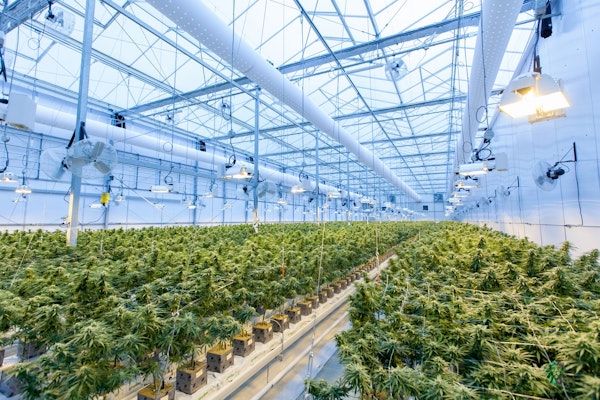
Ergonomics and the associated employer requirements to maintain safe workplaces, especially in industries where repetitive motion injuries are common, are at the forefront of modern claim prevention. However, the legal cannabis industry could be especially vulnerable.
If you’re not convinced about the value of telematics in the auto insurance space, you might be swayed after reading what Phil Ost, head of personal lines at Zurich Insurance Company, had to say during a virtual fireside chat at Connected Claims USA 2020.