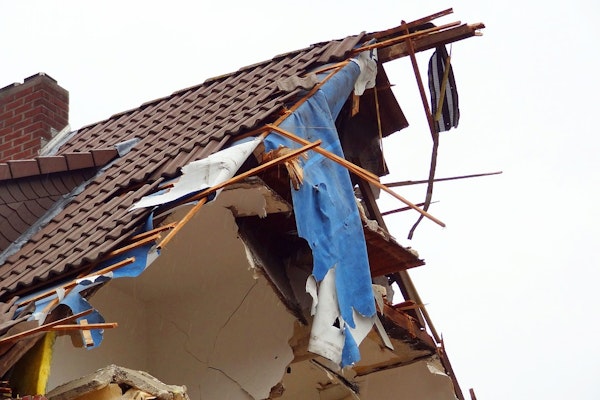
Field adjusting can be a tricky business—professionals are often walking into unfamiliar environments with a number of uncertain variables that they are unable to fully prepare for. Many claims professionals have tried-and-true protocols and processes they follow when out in the field in order to keep themselves safe and have the most successful visit possible.
To help the public understand the insurance industry’s role, the Insurance Information Institute (I.I.I.) has launched a new educational campaign — one that makes it clear that insurance should not be on the hook for the coronavirus pandemic.
In 1970, economist Milton Friedman published an idea that has driven capitalism for the last half-century: The only responsibility of a corporation is to generate profits for shareholders. That sole focus has produced distortions that have made many, including senior executives, increasingly uncomfortable and has led to an alternative formulation known as “stakeholder capitalism.”
When it comes to so-called “nuclear verdicts”—or “social inflation” in the insurance industry—hindsight is 20/20, as a survey of the highest payouts in motor vehicle accident and premises liability cases across the Southeast U.S. reflects.
Between the industry’s digital disruption and now the practicing of social distancing related to COVID-19, the processes of a catastrophe response, both field and desk adjusting, are undergoing significant changes.
As we optimistically look forward to at least the beginning of the end of the COVID-19 virus, our industry should start to prepare for the “pandemic of litigation” that will undoubtedly follow.
There is a belief that business closure orders by civil authorities trigger civil authority coverage in business income insurance policies if the orders allege property damage of some kind. This is a misconception that is typical of generalizations about insurance contracts that come from the failure to actually read the policy language.
Motor vehicle accidents led to more than 2.5 million emergency department visits in 2017, according to the CDC’s most recent estimates. Emergency room and other hospital visits can be costly for insurance carriers, as facility charges are some of the highest fees that carriers face when paying for medical treatments related to auto accidents.
A storm is rising, and it isn’t the type which causes damage to homes and vehicles. It causes damage of a much more insidious nature. Following a storm or other natural disaster, canvassers hired by the “hail cartel”—lawyers or opportunistic general contractors—can be found blanketing a neighborhood and knocking on doors.
Following a fire loss, claims professionals focus on restoring productivity, minimizing business interruption, and satisfying the needs of their policyholders. With respect to technical equipment restoration, minutes and hours are critical.
In nearly every litigation, there are three parties: The plaintiff, the defendant, and the insurer. Once the duty to defend is triggered, an insurer must typically provide a “complete” defense to the litigation until settlement is reached, even if uncovered claims are included.
Individuals perceive risks in markedly different ways. One person may consider a risk to be critical, while another could consider it inconsequential. Often rooted in psychology, these differences in risk perception can create challenges for risk professionals, especially when designing and implementing an effective risk management program.
Credit the coronavirus with one thing. In an era when individuals and organizations strive to establish themselves as “thought leaders,” COVID-19 has vividly—or, should we say, morbidly—demonstrated the importance of people becoming sensible “thought followers.”
Insurance carriers and claim professionals deal with various catastrophes each year, so it was only fitting that when COVID-19 struck they were some of the first prepared to revert to “emergency work from home mode.”